 Ahmed AlOtaibi
Project background
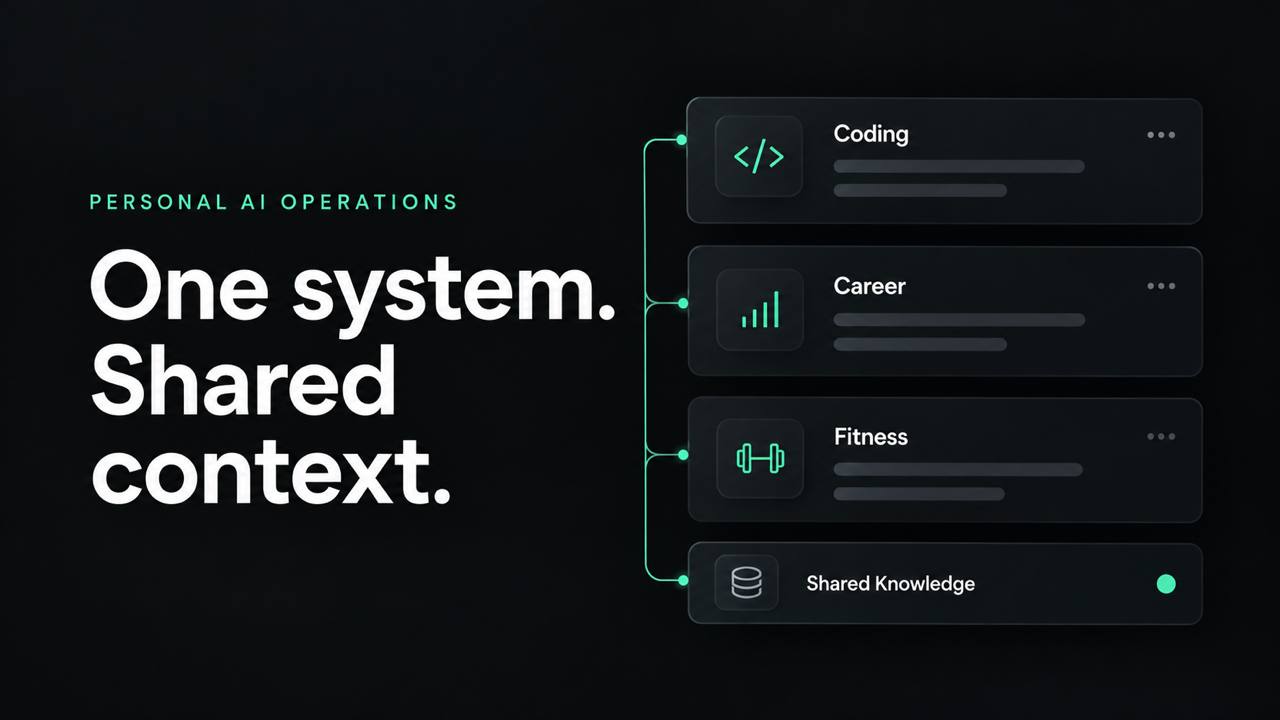
I use AI tools for coding, career planning, personal training, and other work. Keeping those workflows in separate conversations meant useful context was often scattered. When one workflow needed a decision or project detail from another, I had to explain it again or copy it across.
I built a system that lets these workflows share useful context while keeping clear rules about what each can read, change, and act on. It has grown beyond a shared knowledge base to include data collection, validation, scheduled reports, and records I can check when something looks wrong.
System design
A shared Obsidian knowledge base connects the specialist workflows. Each can read relevant context, but writes to its own branch. An operator workflow reviews those contributions and maintains the shared record. If sources conflict, I resolve the disagreement before the record changes.
The knowledge base provides context; operational records remain the source of truth for calculations and tracked decisions. I keep repeatable collection and calculation work in deterministic scripts, with AI tools handling tasks such as interpreting verified information and drafting explanations. That separation lets me investigate an incorrect result against its inputs and rules.
Workflow and handoffs
I started with a specialist coding workflow to develop and maintain my software projects. I defined its role and working practices, then refined its operating instructions and reusable skills as I used it across projects. I implemented those configuration changes through the operator workflow, which handles technical operations and coordination. The coding and operator workflows became the foundation for the wider system, with career and fitness workflows added around them.
For job discovery, I built a collector that reads configured official employer and applicant-tracking sources, validates the listings, removes duplicates, and stores the results locally. I refined the filters around role requirements and relevance so a familiar keyword alone would not put an unrelated job on the shortlist. The scouting workflow reviews those collected listings and explains both the fit and the gaps.
I keep discovery separate from application decisions. Finding or viewing a role does not mark it as applied, and the workflow does not submit applications or contact employers for me. If a source fails or a search finds no new matches, the report needs to make that limit clear rather than imply there are no opportunities anywhere.
For fitness planning, I implemented a pipeline that turns completed training records into structured history, training-load-based readiness estimates, and a daily recommendation. It accounts for overlap between muscle groups and asks for clarification when a new exercise cannot be mapped confidently. A journal preserves the underlying records. Python rules calculate the estimates, while the language model can explain them.
The fitness engine has gone through three versions. I started with snapshot-based tracking, moved to replaying completed workout history, then added regional estimates, overlap checks, and journaling. I keep earlier versions as historical references so the current design does not erase the work that led to it.
The shared knowledge layer also connects project work to career materials. A coding workflow records project evidence, the operator organizes the verified information, and the career workflow can use the approved record. I can carry project context into a resume discussion without reconstructing it from separate conversations.
My contribution
I designed, implemented, and operate the system using AI coding tools. My work spans the workflow architecture, collection and validation rules, data records, testing, and rollout decisions. I investigate incorrect results, refine the behavior, and check the output against the problem I am trying to solve. I also set the boundaries around shared information and actions that need my approval.
Results and limitations
The result is a working personal system with repeatable collection, recorded decisions, and scheduled reports. In daily use, it reduces repeated explanations and manual context transfers. I have not measured exact time saved, token reduction, or cost savings.
The collector covers its configured sources, not the entire job market. Fitness readiness values are model estimates, not measurements of physiological recovery. Shared context still depends on current records and review. This is a private system I use myself, not a product deployed to external customers.
Update history
- Renamed the case study to Personal AI Operations System and added details about official-source job collection, scouting, and fitness-planning automation. Expanded the implementation narrative and retained the progression from snapshot-based tracking to replayable history and regional estimates.